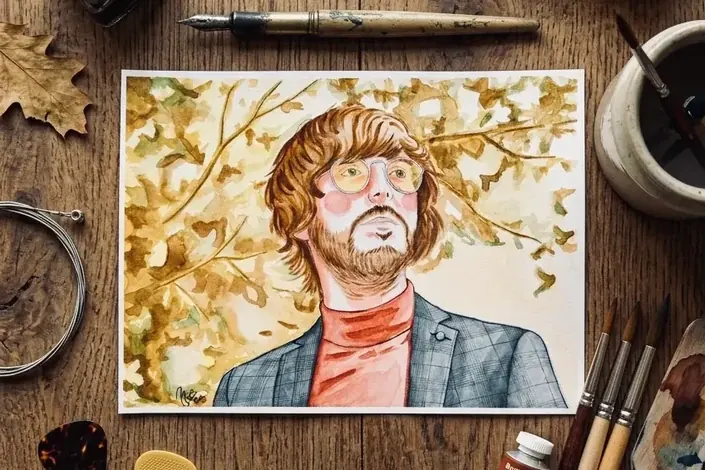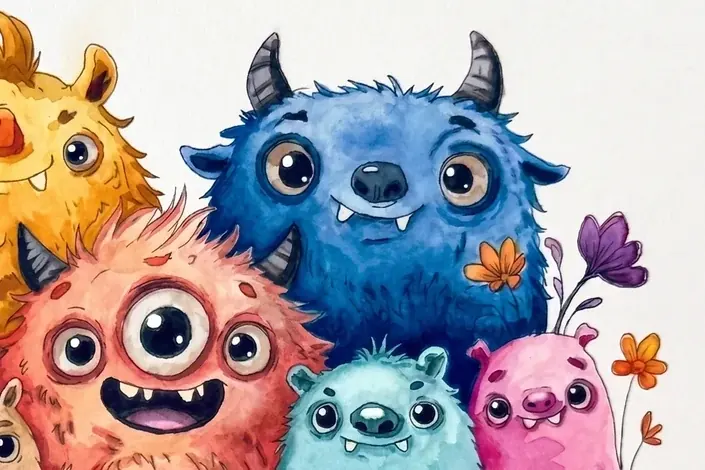

Every time someone sees one of my watercolors for the first time, they ask me the same thing: how do you make it look so loose and so precise at the same time? The answer has a name: line wash.
Line wash is a technique that combines two gestures that, at first glance, seem opposite. On one hand, the line: a fine, decisive ink stroke that draws the structure — the eyes, the outline of a building, the silhouette of a pet. On the other, the wash: the free watercolor bloom that spreads across the wet paper and brings the life, the light and the emotion that the line alone can't give.
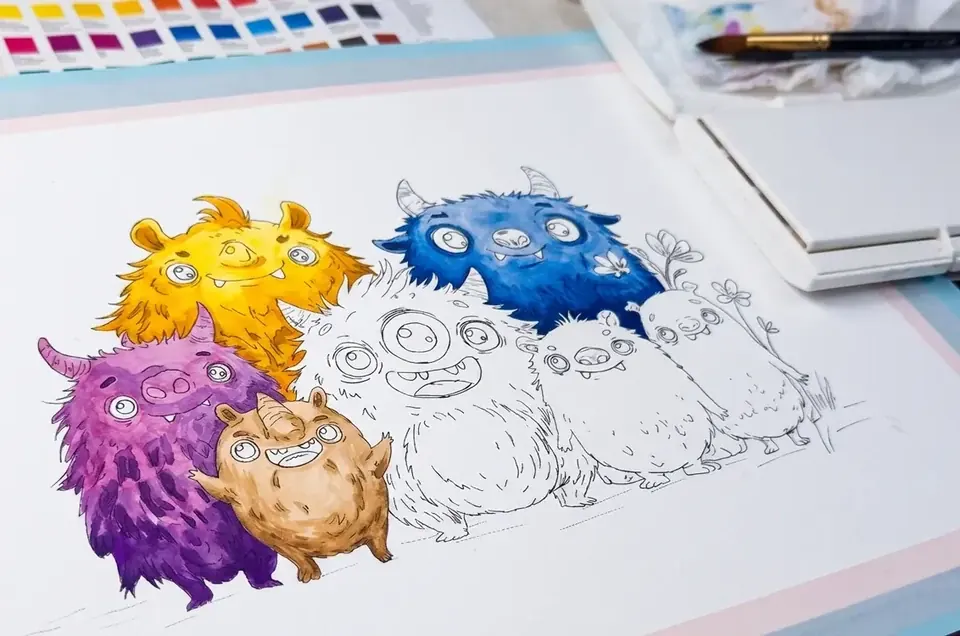
The line is the skeleton. The color, the soul.
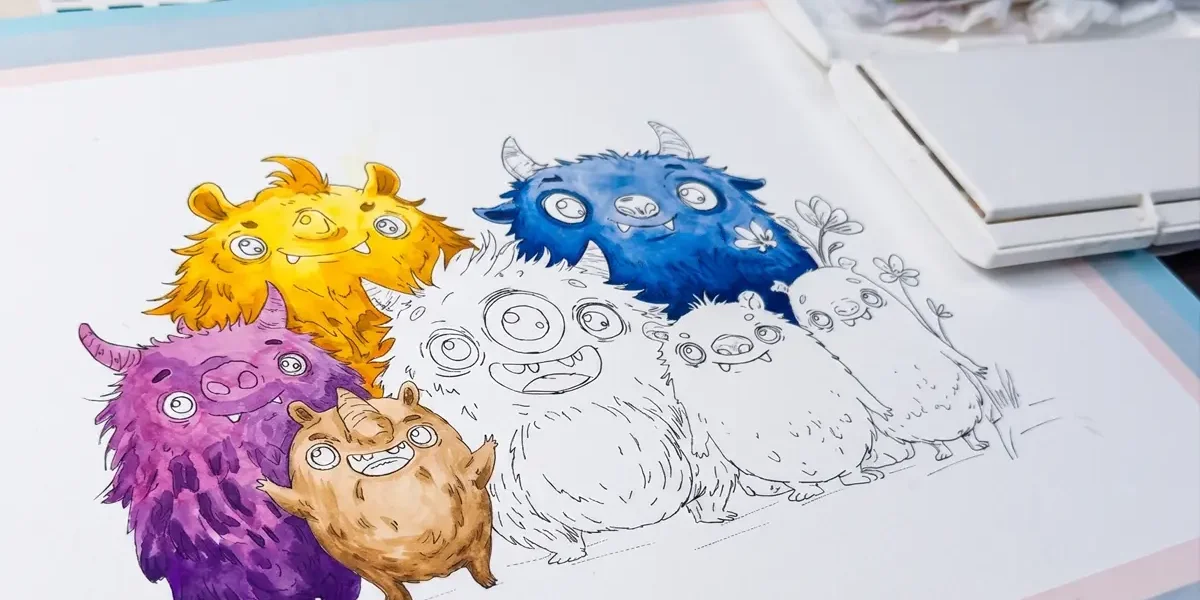
I always start with a pencil underdrawing on the paper; once the proportions are where they need to be, I ink the line with a technical pen, and only then does the watercolor come in — from that point there's no turning back, and that tension is part of what gives each piece its own character. Then comes the water: I wet the paper where I want the color to breathe, and I let the watercolor find its own path within the boundaries the ink has already marked.
It's a technique that demands letting go of control at exactly the right moment. Too much precision and the result turns rigid, like a technical illustration. Too much freedom and you lose the structure that makes what you're painting recognizable. Line wash lives in that middle point — and finding it, commission after commission, is what I enjoy most about this craft.
If you follow me on Instagram you've probably seen a timelapse of the process: ink, water, first wash, layers, final detail. Every photo of that process is, to me, just as interesting as the finished piece.